7 Simple Ways to Lower Fall Stress and Support Your Hormones Naturally
THE VITAL TAKE 7 Simple Ways to Lower Fall Stress and Support Your Hormones Naturally Kimber Williamson, MSN, RN, BC-FMP | Kimber Williamson Wellness, LLC |
“Is she ever going to tell me what I can actually do about all of this?”
I know you may be thinking that, and it’s a fair question. I’ve spent a lot of time talking about how fatigue, hormones, and gut health shift as fall turns into the holiday season. Understanding the why matters, because that’s how you make informed choices and know where to go from there.
In my last post, How Fall Throws Your Hormones Off Balance, we looked at how shorter days, disrupted sleep, blood sugar swings, and holiday stress can leave you feeling wired, tired, and off.
Now for the flip side: what to do about it. Below are seven simple shifts I give clients as a starting point for foundational health. No lab work and no overhaul. Pick one or two, give them a try, and notice how you feel the next day. It might be as simple as changing what you eat first at breakfast.
Tip 1: Get Morning Light Within 30 Minutes of Waking
Why: Light is the main signal that sets your circadian rhythm, and your cortisol follows that rhythm. Morning light supports the cortisol awakening response, the natural surge of cortisol that helps you wake up and get going.1 In fall, the sun comes up later and goes down earlier, and your body’s clock shifts with it. That makes getting sunlight early in the day even more valuable.
How: Start the day with 10 minutes outside, with no sunglasses. It could be a walk, morning coffee on the porch, or wandering the yard to water your flowers or garden. On cloudy days, stay out a little longer. Even an overcast sky is far brighter than your indoor lighting.
Fall angle: If you wake before sunrise, turn the lights on instead of sitting in the dark,1 and head outside as soon as it’s light. If you can’t get outside, sit or stand next to a bright window. It won’t give you the full benefit of sunlight, but it’s better than skipping the light altogether.
Tip 2: Eat Protein Before Carbs at Breakfast
Why: If you grew up in the 90s, you know convenience was the priority. Cereal, bagels, toast, waffles, and other quick and easy breakfasts are mostly carbohydrates, and they can send blood sugar up fast and drop it just as fast. Eating protein before carbs has been shown to lower the blood sugar and insulin rise after a meal.2,3 That research is small and has mostly been done in people with type 2 diabetes, but the principle is simple and easy to try. Steadier blood sugar can mean fewer cravings, and protein helps you feel full longer.
How: Start with eggs, Greek yogurt, or a protein shake before the toast, oatmeal, or fruit. That could look like egg bites, yogurt with chia seeds, or steak and eggs.
Fall angle: A pumpkin spice latte is a sugar-first kind of morning. Fall comfort drinks are easy to enjoy without thinking about what’s in the cup. If you eat a protein-rich breakfast first, that latte may be less likely to turn into a sugar spike and an afternoon of overdoing it.
Note: If you have diabetes or take blood sugar medication, check with your provider before changing your meals.
Tip 3: Add a Magnesium-Rich Food Daily
Why: Magnesium helps power more than 300 reactions in your body4 and supports your muscles, nerves, heart, and digestive system. In population studies, higher magnesium intake has been linked with healthier blood pressure.4 Some research suggests it may support sleep, though that evidence is still limited and comes mostly from supplement studies in older adults.5 Magnesium also affects bowel regularity, which is why it’s used in some laxatives. Even so, about half of Americans don’t get enough magnesium from food.4
How: Pumpkin seeds are one of the richest sources. An ounce of roasted, hulled seeds, a small handful, has about 156 mg, roughly a third of the Daily Value.4 Cooked spinach has about 78 mg per half cup, and dark chocolate (70-85% cacao) has about 65 mg per ounce. Almonds, black beans, and chia seeds are good sources too, so mix it up.
Fall angle: Pumpkin seeds are in season right now, which makes this the perfect time to stock up. Keep a jar where you keep your coffee, and grab a handful when the afternoon slump hits. They also give you some protein and healthy fat to keep you satisfied. Notice how you feel.
Note: Check with your provider before taking a magnesium supplement, especially if you have kidney issues or take certain medications. Food is a gentler place to start.
Tip 4: Practice the Physiological Sigh
Why: We all know breathing is essential, but how you breathe can also change how your body feels. In a one-month randomized study, people who did 5 minutes a day of exhale-focused breathing, called cyclic sighing, had a greater improvement in mood and a bigger drop in breathing rate than people who practiced mindfulness meditation for the same amount of time.6 A longer exhale slows your breathing, which is a simple way to help your body settle.
How: You don’t need anything special, and it doesn’t cost a thing. Follow these steps:
1. Breathe in through your nose.
2. Take a second, shorter sip of air through your nose to top off your lungs.
3. Slowly breathe out through your mouth, making the exhale longer than the inhale.
Repeat for a few rounds. Use it while you wait in the car line at pickup, before a difficult conversation, or while you’re outside getting your morning sunshine. To match the study, try it for 5 minutes once a day.
Fall angle: The holiday schedule brings stress and overwhelming moments. Use this technique when it feels like too much, and notice how your body responds.
Note: If you feel lightheaded, stop and return to normal breathing.
Tip 5: Cut Caffeine After 12 p.m.
Why: In a controlled study, caffeine taken even 6 hours before bedtime reduced total sleep time by more than an hour, and the participants often didn’t notice.7 A 2023 meta-analysis found that a standard cup of coffee should be finished about 9 hours before bed to avoid losing sleep, and larger doses like energy drinks and pre-workouts need an even longer gap.8 Many people don’t realize the effect, so they keep sipping coffee and energy drinks through the afternoon.
How: Have your caffeinated drinks in the morning, then switch to decaf or herbal tea in the afternoon. When you reach for coffee because you’re starting to drag through the day, try a handful of pumpkin seeds or a short walk instead. See how your body responds.
Fall angle: Remember from How Fall Throws Your Hormones Off Balance that sleep is often the first domino to fall, and then the cycle repeats. Cutting afternoon caffeine sets you up for a more restful night.
Note: Caffeine lasts longer in some people than others, including during pregnancy and with some medications. That’s why I suggest noon as a starting point, but always listen to your body.
Tip 6: Build a 15-Minute Tech Curfew Before Bed
Why: Light is a powerful signal for your body clock, and the light from screens is no exception. In a study comparing a light-emitting e-reader with a printed book before bed, people using the e-reader took longer to fall asleep, made less melatonin, had a delayed body clock, and were less alert the next morning.9 Phones, tablets, and TVs give off similar light. When melatonin is delayed, it’s harder to fall asleep when you want to.
How: Start by putting your phone down 15 minutes before bed and dimming the lights. Then set up a simple wind-down: read a book, do some light stretching, or try a few rounds of your physiological sigh. Once 15 minutes feels easy, work up to 30-60 minutes before bed and notice how you feel.
Fall angle: With the sun going down earlier, your lights and screens come on sooner, so you spend more of your evening in artificial light. That makes a tech curfew even more valuable this time of year.
Tip 7: Batch-Cook One Meal a Week
Why: Planning your meals ahead has real benefits. In a large study of more than 40,000 adults, people who planned their meals ahead ate a higher-quality, more varied diet.10 That kind of study shows an association rather than proof that planning causes better eating, but it fits what many of us experience. Planning also lightens the mental load of figuring out what’s for dinner at the last minute. We’ve all seen the videos joking that being an adult means constantly asking, “What’s for dinner?” Batch-cooking is one easy way to answer that question once for the week.
How: Pick one meal, such as soup, chili, sheet-pan chicken, or a crockpot dish, and cook it one time. Then you have leftovers and can eat it twice. Build it around protein and vegetables, which also makes Tip 2 easier.
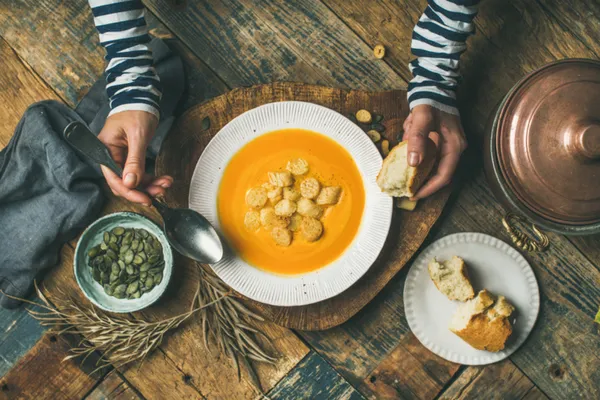
Fall angle: This is where I shine. I love a good slow cooker meal, and even better, a soup. I can fill them with veggies, good meats, and rich flavor, and they make these cooler days feel so good.
Start Small
A lot of times we feel like we need to take everything on and change it all at once. Then we become overwhelmed and can’t stick with any of it. So pick one thing that feels most doable this week. See how it goes, and then pick another. Consistency with one small shift beats an overhaul that gets abandoned in five days.
If you’ve tried the basics and still feel like something deeper is going on, that’s often a sign it’s time to look at the root cause of your symptoms.
Book a free Root Cause Clarity Session, and we can talk through what’s happening with your symptoms and where you may be stuck.
References
1. Scheer FA, Buijs RM. Light affects morning salivary cortisol in humans. Journal of Clinical Endocrinology & Metabolism, 1999. https://pubmed.ncbi.nlm.nih.gov/10487717/
2. Shukla AP, et al. Food order has a significant impact on postprandial glucose and insulin levels. Diabetes Care, 2015. https://pmc.ncbi.nlm.nih.gov/articles/PMC4876745
3. Shukla AP, et al. Carbohydrate-last meal pattern lowers postprandial glucose and insulin excursions in type 2 diabetes. BMJ Open Diabetes Research & Care, 2017. https://pmc.ncbi.nlm.nih.gov/articles/PMC5604719
4. NIH Office of Dietary Supplements. Magnesium: fact sheet for health professionals. https://ods.od.nih.gov/factsheets/Magnesium-HealthProfessional/
5. Mah J, Pitre T. Oral magnesium supplementation for insomnia in older adults: a systematic review and meta-analysis. BMC Complementary Medicine and Therapies, 2021. https://pubmed.ncbi.nlm.nih.gov/33865376/
6. Balban MY, et al. Brief structured respiration practices enhance mood and reduce physiological arousal. Cell Reports Medicine, 2023. https://pmc.ncbi.nlm.nih.gov/articles/PMC9873947
7. Drake C, et al. Caffeine effects on sleep taken 0, 3, or 6 hours before going to bed. Journal of Clinical Sleep Medicine, 2013. https://pmc.ncbi.nlm.nih.gov/articles/PMC3805807/
8. Gardiner, Carissa et al. “The effect of caffeine on subsequent sleep: A systematic review and meta-analysis.” Sleep medicine reviews vol. 69 (2023): 101764. doi:10.1016/j.smrv.2023.101764
9. Chang AM, et al. Evening use of light-emitting eReaders negatively affects sleep, circadian timing, and next-morning alertness. Proceedings of the National Academy of Sciences, 2015. https://pmc.ncbi.nlm.nih.gov/articles/PMC4313820
10. Ducrot P, et al. Meal planning is associated with food variety, diet quality and body weight status in a large sample of French adults. International Journal of Behavioral Nutrition and Physical Activity, 2017. https://pubmed.ncbi.nlm.nih.gov/28153017/