
Tired but Wired: How Your Cortisol Rhythm Shapes Your Energy
The VITAL Take
Tired but Wired: How Your Cortisol Rhythm Shapes Your Energy
Kimber Williamson MSN, RN, BC-FMP | Kimber Williamson Wellness, LLC
It’s 3 PM and you’re counting down the minutes until the end of your workday. The exhaustion hit like a train, and you don’t know how you’ll get through the rest of the day of running kids around. You reach for an energy drink. It works, and now it’s 10 PM, you’re lying in bed wide awake, and you reach for your phone.
I get it. I’ve been there. You feel depleted all day, then can’t sleep at night, and it touches everything. You can’t be fully present with your kids, enjoy time with your spouse, or even focus at work. You don’t feel like yourself. Your rhythm is off.
What cortisol is meant to do across a day
Cortisol is a driver of energy. When it rises, your body responds by creating energizing signals, and that rise and fall sets your circadian rhythm. The sun comes up, cortisol goes up, and then it slowly declines through the day. It’s lowest at and shortly after bedtime, then begins climbing a couple of hours before you wake. Research on the body’s 24-hour cortisol pattern shows levels peaking in the early morning, falling across the day, and bottoming out around midnight.¹
Cortisol also helps run your blood sugar. When your blood sugar drops, or when your body needs a little extra to run from the perceived bear, your body first releases glucagon and adrenaline, and cortisol joins in if levels stay low, signaling your liver to release more glucose.²
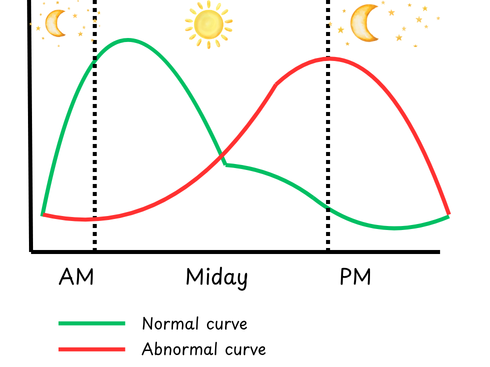
When cortisol doesn’t follow this pattern, whether it’s inverted, flipped, or doesn’t spike at all, it can disrupt your whole life.
What can throw the rhythm off
A wonky cortisol rhythm absolutely disrupts life, but first we have to ask why. Several factors can create a chaotic rhythm:
Chronic stress. When we’re constantly stressed, we keep making cortisol throughout the day because we have to be ready for that bear. Over time, that ongoing demand can disrupt the feedback loop between the brain and adrenals (the HPA axis), and your cortisol output can become blunted or out of sync.
Not enough sleep. Staying up too late, waking in the middle of the night, or keeping an inconsistent schedule all matter. Your circadian rhythm depends on cortisol, so when your wake and sleep times bounce around, your body gets confusing signals and stays on alert, ready to go.
Blood sugar swings. Remember that blood sugar and cortisol are linked. When your blood sugar crashes, your body works to bring it back up, and cortisol is part of that response. If your blood sugar dips in the middle of the night, that hormone response may wake you and disrupt both your sleep cycle and your normal rhythm.
Gut issues. The gut and cortisol are tightly linked and can create a cycle of inflammation and cortisol spikes. When the gut is irritated or inflamed, cortisol rises to help the body respond. Research shows stress hormones, including cortisol, can weaken the gut barrier,³ though most of that evidence comes from lab and animal studies, and human research is still catching up.⁴ So when we’re stressed, cortisol may be affecting our gut, and the cycle continues.
Caffeine timing. Caffeine is a great tool when you need a lift, but it also stays in your system for hours. In one small study, caffeine taken even six hours before bed cut total sleep time by more than an hour, and participants often didn’t notice.⁵ Using it every day at 3 PM can make it harder to wind down at night. Timing matters, and so does knowing how your body responds.
Signs your rhythm may be off (this is not a diagnosis)
These patterns are worth investigating further:
You wake up and are still dead tired all day. Your cortisol may not be rising enough in the morning to carry you through.
You wake at 3 AM every night. Your cortisol may be spiking too early, or responding to a drop in blood sugar.
You’re wired and tired at bedtime. You’re exhausted but can’t settle, which may mean cortisol is running high right when it should be coming down.
You hit a wall at 3 PM. Is your cortisol bottoming out in the afternoon?
Why guessing falls short
We could sit and guess all day. Neurohormones, insulin, blood sugar, thyroid, gut health, and more can all affect your energy and your cortisol rhythm. Kimber's VITAL Method gives us the framework to look further. That’s why the V and the I in VITAL matter so much.
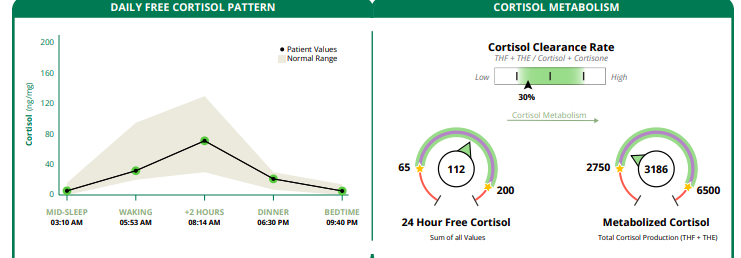
First we Validate your story. Knowing something is off, and using your story to look at your symptoms and data, is essential. Then we Investigate. We use the DUTCH Complete to see more about your HPA axis and cortisol rhythm, plus comprehensive labs and the GI-MAP to help explain why your rhythm is off. Getting the whole story helps us understand what’s happening and how to support your body in correcting it.
3 small starting steps you can take today
1. Get morning light. Getting outside and letting daylight hit your face soon after waking helps support your body’s morning cortisol rise and a healthy circadian rhythm. Early research suggests morning light can boost the natural cortisol rise after waking.⁶
2. Eat a protein-forward breakfast (bonus points for fiber). This helps prevent blood sugar swings and crashes, which would otherwise call on cortisol to help bring your blood sugar back up.
3. Keep a consistent bedtime with good sleep hygiene. Go to bed at the same time every night, dim the lights a couple of hours before, cut back on blue light, and wind down stimulation. These cues tell your body it’s safe to power down, which helps bring cortisol down and prepares you for a night of real rest.
You may be doing all of this and still struggling
If that’s you, your HPA axis may be stuck in a cycle and doesn’t know how to get out. That’s when it’s worth looking deeper, so you can build a plan around your rhythm and your life.
If you’re ready for days of playing with your kids, going to bed beside your spouse without feeling wired, or simply having the energy to get through your workday, let’s take a closer look. Start by downloading the Energy Boost Blueprint, and if you feel like you need more, book a complimentary Root Cause Clarity Session.
References
“Modified Cortisol Circadian Rhythm: The Hidden Toll of Night-Shift Work.” International Journal of Molecular Sciences. 2025;26(5):2090.
Verberne AJM, Sabetghadam A, Korim WS. “Neural pathways that control the glucose counterregulatory response.” Frontiers in Neuroscience. 2014;8:38.
Molotla-Torres DE, et al. “Role of Stress on Driving the Intestinal Paracellular Permeability.” Current Issues in Molecular Biology. 2023;45(11):581.
“Psychosocial stress-induced intestinal permeability in healthy humans: What is the evidence?” Neurobiology of Stress. 2023;27:100579.
Drake C, Roehrs T, Shambroom J, Roth T. “Caffeine effects on sleep taken 0, 3, or 6 hours before going to bed.” Journal of Clinical Sleep Medicine. 2013;9(11):1195–1200.
Figueiro MG, Rea MS. “Short-wavelength light enhances cortisol awakening response in sleep-restricted adolescents.” International Journal of Endocrinology. 2012;2012:301935.